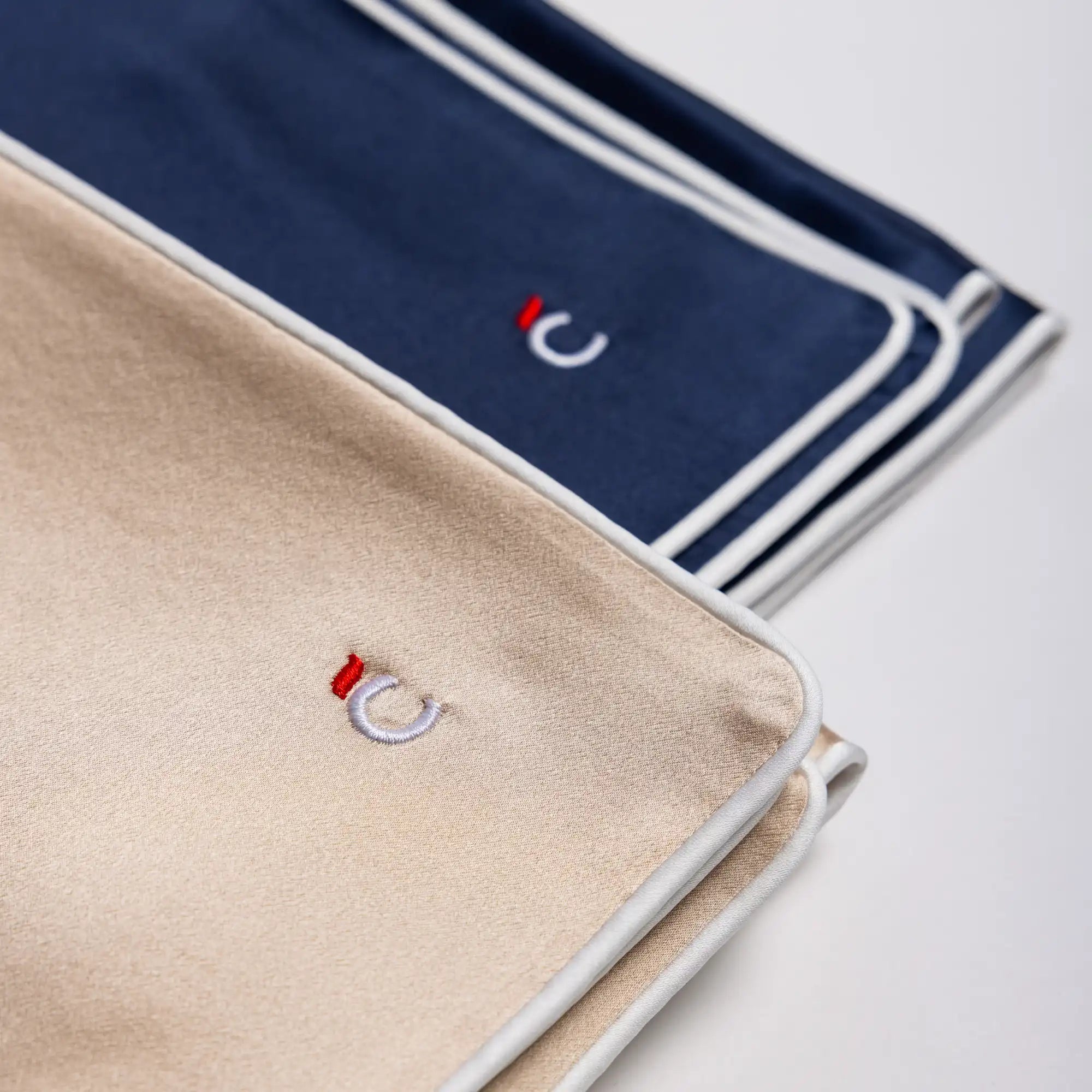
Silk or satin pillowcase: what's the difference for sleeping?
When looking for a pillowcase that is softer for the skin and hair, two words often come up: silk and satin.
These terms are sometimes used as if they refer to the same thing, when in reality they correspond to two different concepts.
Understanding the difference between a silk pillowcase and a satin pillowcase allows for a more informed choice for nighttime comfort, as well as for the quality of the textile used daily.
Silk: an exceptional natural fiber
Silk is a natural fiber produced from the cocoon of the silkworm. Used for millennia in textiles, it is renowned for its fineness, softness, and ability to regulate temperature.
A silk pillowcase offers several qualities sought after for sleep:
-
a naturally smooth surface, which limits friction on the skin and hair
-
good breathability, appreciated in both summer and winter
-
a very particular feeling of freshness and softness
It is for these reasons that many people today choose to sleep on a silk pillowcase, particularly to take care of their skin and hair during the night.
To learn more about its benefits, you can also read our article:
Why sleep on a silk pillowcase?
Satin: a type of weave
Unlike silk, satin is not a material, but a type of weave.
The satin weave creates a very smooth and shiny surface. This finish can be obtained with different fibers:
-
polyester
-
cotton
-
viscose
-
or sometimes silk
Thus, a satin pillowcase can be made with very different materials, some of which are synthetic.
This explains why polyester satin pillowcases, visually similar to silk but with very different properties, are often found on the market.
Key differences between silk and satin
Here are the essential distinctions:
| Silk | Satin | |
|---|---|---|
| Nature | Natural fiber | Type of weave |
| Origin | Silkworm cocoons | Can be synthetic or natural |
| Breathability | Very good | Varies by fiber |
| Feel | Very soft and light | Smooth but sometimes less breathable |
In summary, silk is a material, while satin is a fabric manufacturing technique.
Why some people prefer silk for sleeping
More and more people are choosing silk for their pillowcases because it offers a particularly pleasant textile experience during the night.
The smooth surface of silk can notably:
-
reduce friction on the skin
-
limit sleep creases
-
preserve hair softness
Silk also has a natural ability to regulate temperature, which makes it comfortable in both winter and summer.
How to recognize a real silk pillowcase
Given the many appellations on the market, a few elements can help identify a true silk pillowcase:
-
the mention mulberry silk
-
the indication of the momme, which corresponds to the thickness of the silk
-
the presence of clear information on the fabric composition
To learn more about the ideal silk thickness, you can read our guide:
What are the different types of silk? How to choose the best one?
Maison CÉTOILE's vision
At Maison CÉTOILE, we pay particular attention to the choice of materials used to accompany the evening ritual.
Our pillowcases are made of natural mulberry silk, known for its softness and quality, to offer a lasting feeling of comfort night after night.
Because sleep is also about texture, light, and sensation, we believe in the power of calming materials.
FAQ
Is satin always synthetic?
No. Satin refers to a type of weave and can be made with various fibers, both natural and synthetic.
Is silk more breathable than satin?
Breathability depends on the fiber used. Natural silk is generally more breathable than polyester satin.
Can you find silk satin?
Yes. Silk can be woven into satin, resulting in a fabric called silk satin.
Conclusion
The difference between silk and satin is simple:
-
silk is a natural fiber
-
satin is a weaving technique
While both can offer a smooth feel, their properties largely depend on the material used.
For those seeking a natural and breathable sensation during the night, silk remains one of the most appreciated materials.