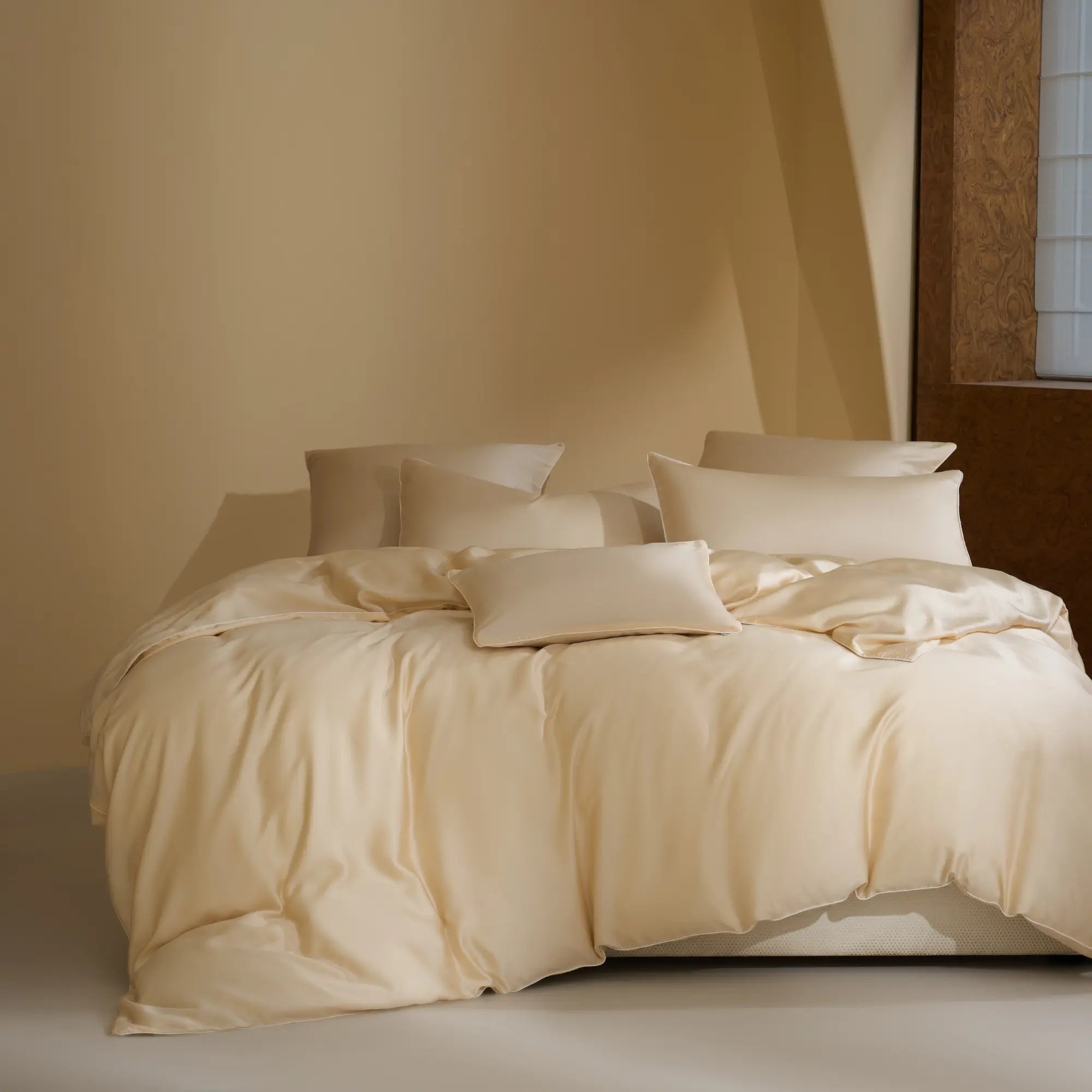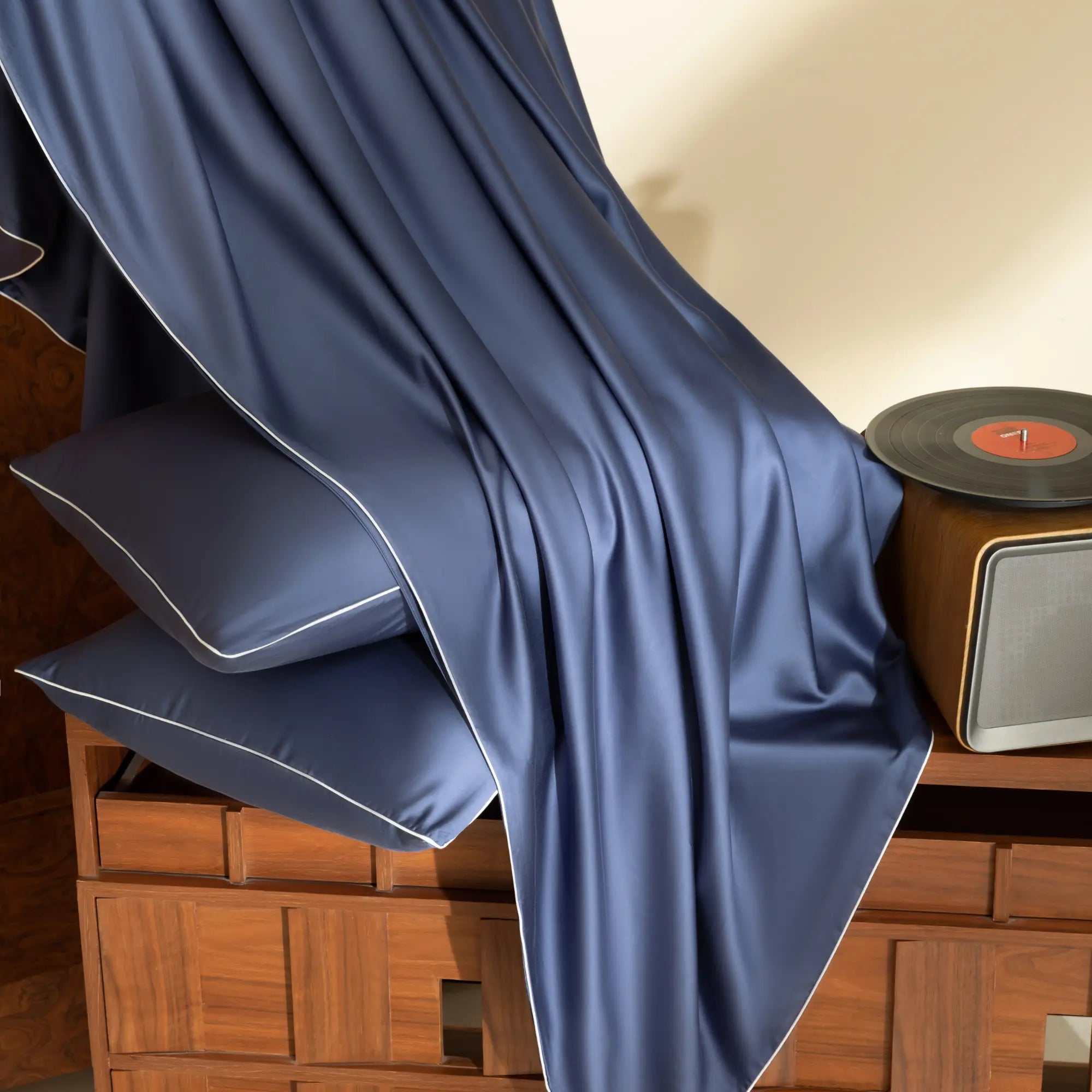
Why do we get hot at night even when it's not warm?
Sometimes, the heat seems to come from within.
The room is quiet.
The temperature seems right.
Yet, sleep becomes more difficult.
You wake up.
You remove the duvet.
Your body is looking for air.
Feeling hot at night for no apparent reason is a common sensation.
And in many cases, it's not just the outside temperature that's to blame.
Sleep also depends on:
- how the body regulates its heat
- the nighttime environment
- and the materials in contact with the skin.
Why do we get hot at night?
During sleep, the body continues to regulate its temperature.
This regulation changes throughout the night:
- the temperature drops to promote falling asleep
- then varies according to sleep cycles
When this balance is disturbed, a sensation of heat can appear, even in a temperate room.
An environment that's too hot... or not breathable enough
The sensation of heat doesn't always come from the room itself.
Certain materials:
- retain moisture
- prevent air from circulating
- create a suffocating sensation during the night
The body then struggles to naturally evacuate heat.
Why certain materials worsen nocturnal heat
Not all fibers react in the same way during sleep.
Materials that are too synthetic or too dense can:
- retain body heat
- increase humidity
- make sleep more unstable
Conversely, some materials better accommodate the body's natural variations.
You can delve deeper into this topic in our article:
→ What material to choose for your sheets: cotton, linen, silk, or TENCEL™ Lyocell?
Do breathable materials really change sleep?
Yes, often more significantly than one might imagine.
A breathable material allows for:
- better air circulation
- more fluid moisture wicking
- a more stable sensation during the night
The body then expends less energy managing temperature variations.
TENCEL™ Lyocell: a cooler feel
TENCEL™ Lyocell is particularly appreciated for warm nights.
This plant-based fiber is known for:
- its breathability
- its softness
- its ability to absorb moisture without feeling heavy
It creates a lighter and more fluid sensation during sleep.
Discover CÉTOILE TENCEL™ Lyocell bedding

Silk: thermoregulating and soothing
Contrary to some misconceptions, silk does not make you hot.
Naturally thermoregulating, it adapts to body variations without causing overheating.
Its smooth surface also limits feelings of discomfort during the night.
We detail this point here:
→ Why sleeping in silk improves sleep quality?
Why do we often wake up when we're hot?
When the body overheats, sleep becomes lighter.
This can cause:
- micro-awakenings
- a feeling of restlessness
- awakenings between 3 and 5 AM
The body then naturally seeks to restore thermal balance.
You can also read:
→ Why do we wake up between 3 and 5 AM?
How to limit the sensation of heat during the night?
A few simple adjustments can improve nighttime comfort:
- opt for breathable materials
- lighten bedding
- avoid overly synthetic fabrics
- promote a calm and airy room
The choice of what to wear at night also plays an important role.
→ What pajamas to choose when it's hot?
→ Sleeping with or without pajamas: what to choose?
Sleep also depends on sensations
The body remains sensitive throughout the night.
A lighter material.
A softer texture.
A more breathable environment.
These details can profoundly change the quality of sleep.
In summary
Feeling hot at night does not solely depend on the outside temperature.
Materials, humidity, fabric breathability, and the sleep environment directly influence nocturnal comfort.
Creating a lighter and more breathable sensation often leads to calmer and more continuous nights.
Frequently Asked Questions
Why do I feel hot at night even when it's not hot?
The sensation of heat can come from the body's regulation, a non-breathable environment, or materials that retain moisture during the night.
What materials should you avoid when you're hot at night?
Overly synthetic or thick materials often retain more heat and limit air circulation.
What material should you choose to sleep better when it's hot?
Breathable materials like TENCEL™ Lyocell or silk better accommodate temperature variations during sleep.