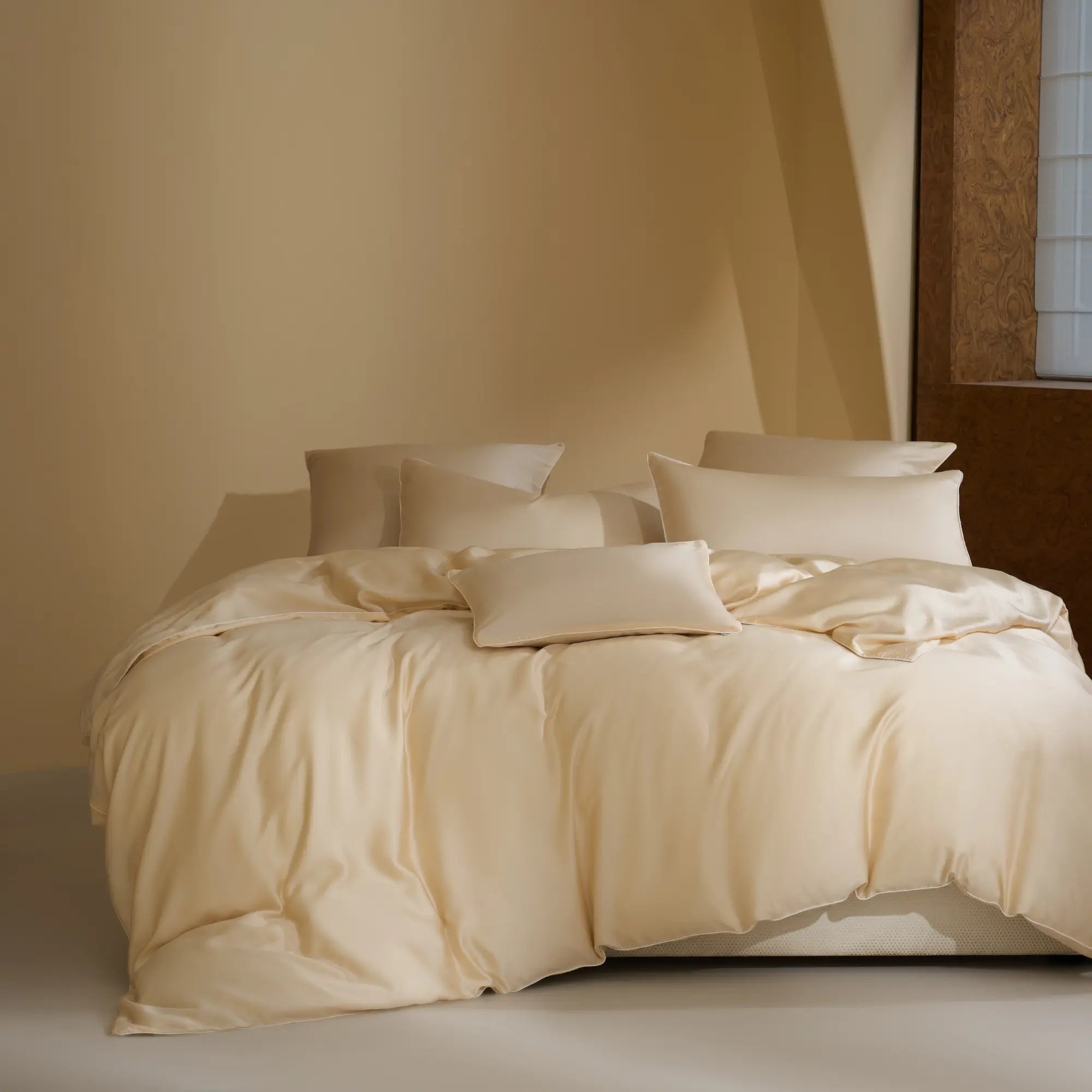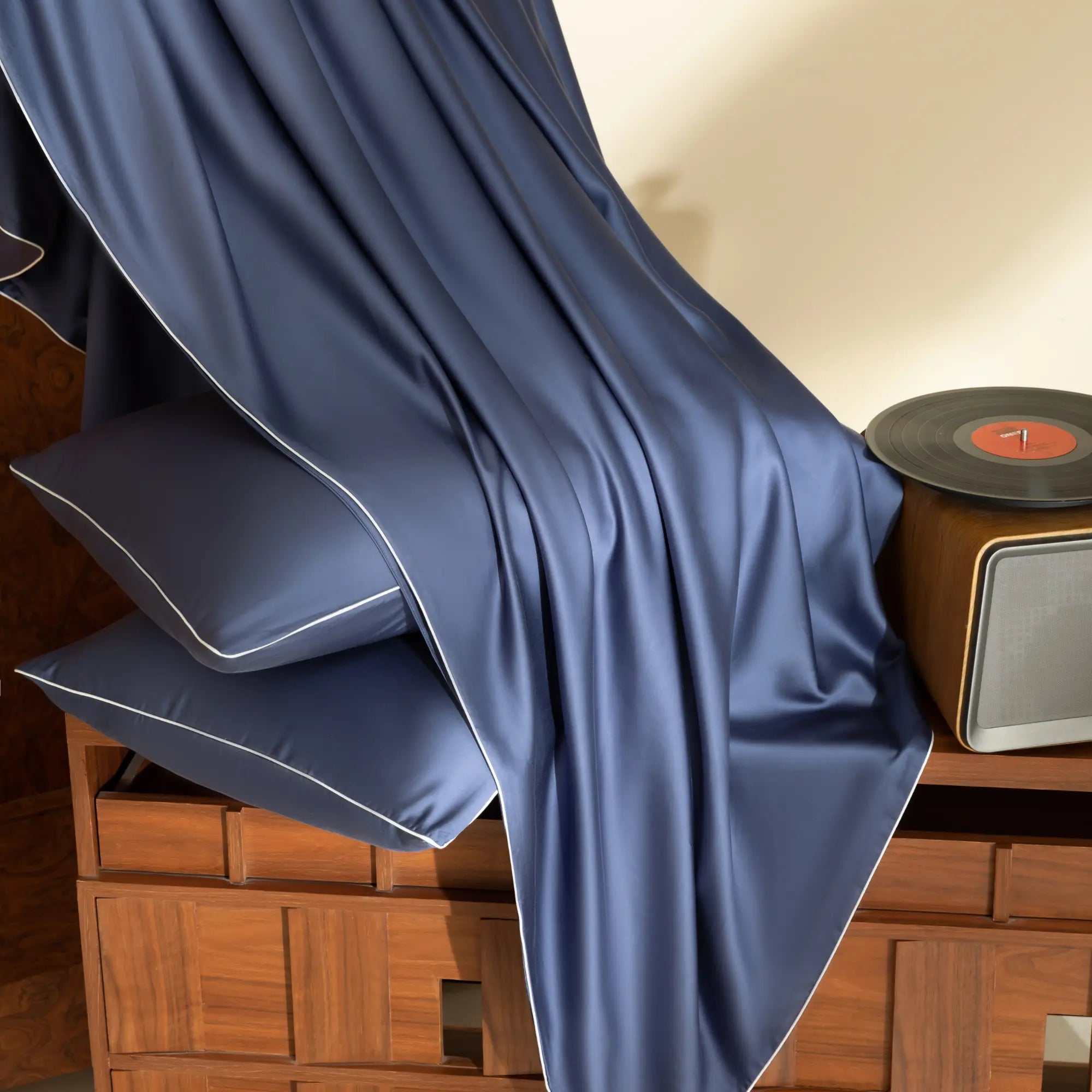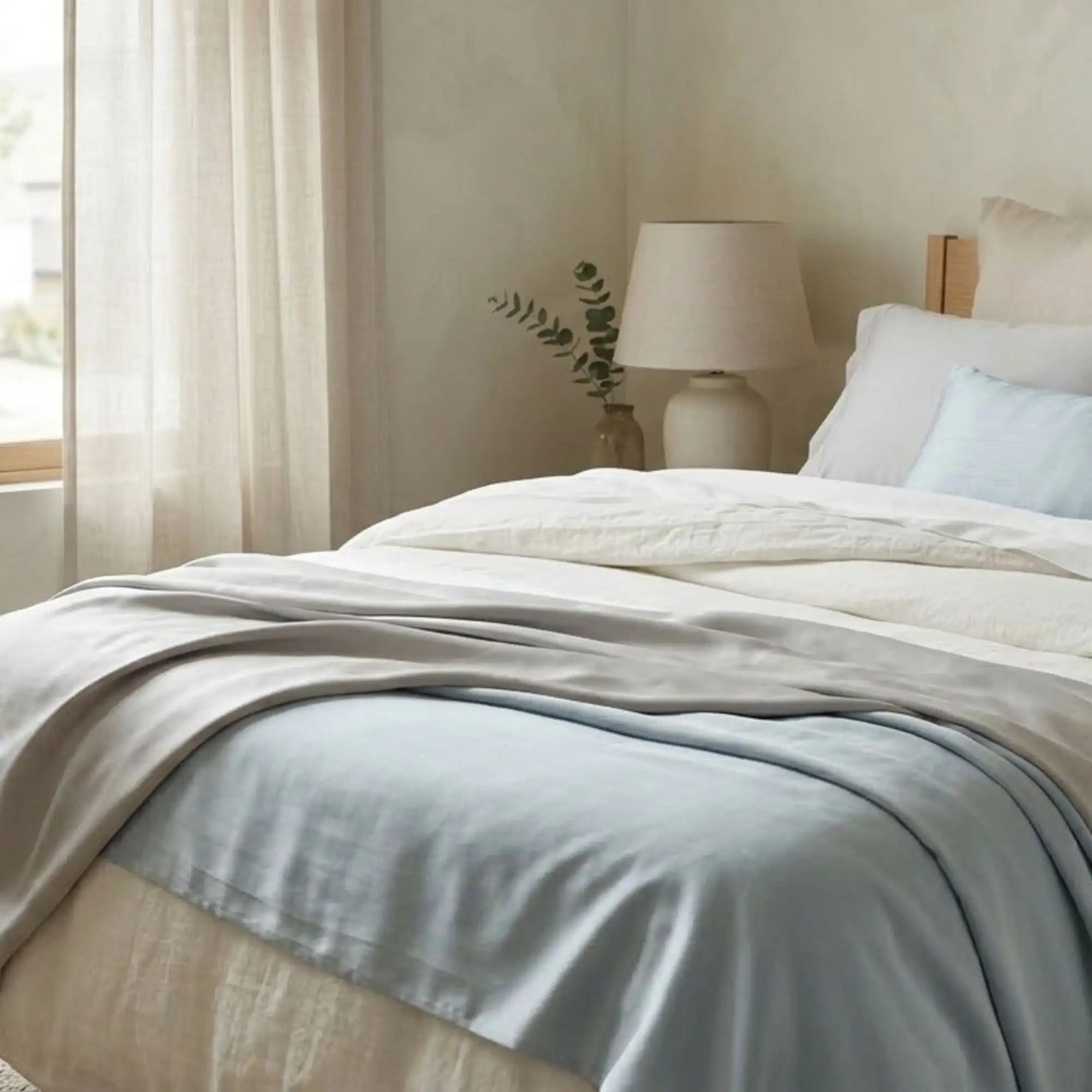
What material should you choose for your sheets: cotton, linen, silk, or TENCEL™ Lyocell?
How sheet material affects your sleep
When you feel hot at night, the material of your sheets plays a crucial role.
Some fibers retain heat, while others allow better air circulation and wick away moisture more easily.
When temperatures remain high during the night, choosing breathable bedding can make a real difference to sleep comfort.
The choice of bedding can therefore influence the feeling of coolness, night sweats, and overall comfort during the night.
Today, several materials dominate bedding: cotton, linen, silk, and TENCEL™ Lyocell. Each has different properties.
Cotton: the most common material
Cotton is the most widely used fiber for sheets.
Appreciated for its softness and ease of care, it comes in several forms such as cotton percale or cotton sateen.
Its advantages:
-
soft and comfortable
-
easy to care for
-
very common
Its limitations:
-
can retain more heat
-
can become rougher over time
-
less breathable than some more modern fibers
Linen: highly breathable and natural
Linen is a plant fiber known for its high breathability.
It is often recommended for those who tend to feel hot during the night, as it allows air to circulate more easily.
Its qualities:
-
very breathable
-
durable
-
natural aesthetic
Its limitations:
-
more textured feel
-
fabric that wrinkles easily
Silk: softness and thermoregulation
Silk is a particularly soft natural fiber.
It also has a natural ability to regulate temperature, making it pleasant both in summer and winter.
Silk is often used for pillowcases, nightwear, or certain high-end textiles, where direct contact with the skin is important.
To learn more, you can also read our article:
Silk or satin pillowcase: what's the difference?
TENCEL™ Lyocell: plant-based silk
TENCEL™ Lyocell is a plant-based fiber made from wood pulp sourced from sustainably managed forests.
Its fibrous structure allows it to absorb moisture and remain breathable during the night.
Its qualities:
-
very breathable
-
soft and fluid
-
good moisture management
-
plant-based fiber
TENCEL™ is highly valued in bedding today for its modern comfort and silk-like softness.
TENCEL™ is highly valued in bedding today for its modern comfort and silk-like softness.
We explain its properties in more detail in our article on TENCEL™ Lyocell and its certified performance.
→ Explore TENCEL™ Lyocell bedding

Comparison of bedding materials
| Material | Softness | Breathability | Ideal if you get hot |
|---|---|---|---|
| Cotton | soft | medium | fair |
| Linen | medium | very good | excellent |
| Silk | very soft | very good | good |
| TENCEL™ | very soft | excellent | excellent |
Which material to choose for your sheets?
The choice often depends on what you are looking for:
For classic and easy-care bedding
→ cotton
For a natural and very breathable textile
→ linen
For exceptional softness
→ silk
For a modern, breathable, and very soft material
→ TENCEL™ Lyocell
The Maison CÉTOILE vision
At Maison CÉTOILE, we have chosen to primarily work with two materials:
-
natural silk, recognized for its softness and elegance
-
TENCEL™ Lyocell, which we like to call plant-based silk
These two materials accompany the evening ritual with the same intention: to offer breathable and comfortable textiles for softer nights.
Frequently asked questions about sheets and heat at night
What material to avoid sweating at night?
The most breathable materials are linen and TENCEL™ Lyocell. Their fibrous structure allows for better air circulation and helps wick away moisture during the night.
What are the coolest sheets for summer?
Linen and TENCEL™ Lyocell sheets are among the coolest for summer. These breathable fibers help limit the sensation of heat and improve sleep comfort.
What sheet material to avoid sweating?
Natural and breathable materials like linen or TENCEL™ are generally more suitable for limiting night sweats.
What fabrics to avoid if you sweat a lot?
Synthetic fabrics like polyester can retain more heat and moisture. Natural or breathable materials are often more comfortable for sleeping.